


Description
Overview
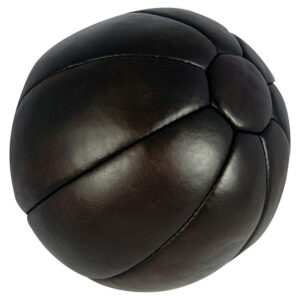
Pick the SMAI Slam Ball 3kg when you want students or new lifters to learn the movement before the load. A slam ball has no bounce, so it hits the floor and stops, and the lifter has to squat or hinge down to collect it. That repeated pick-up recruits more muscles than a traditional medicine ball.
It is made for high impact use and rugged handling, so a class throwing it into the floor for a whole term is exactly what it is for. Need less? The Slam Ball 2kg is the lightest in the range; the Slam Ball 4kg is the next step up.
Key benefits
- Lighter load lets beginners focus on technique in overhead slams and throws.
- No bounce means a squat or hinge on every pick-up, adding work to each rep.
- Designed for high impact use, so repeated floor slams are expected, not abuse.
- Part of a graded range, making it easy to progress students by weight.
Who it's for
Intermediate and secondary PE classes, beginner fitness groups and general conditioning where a 3 kg load is enough. For older or stronger athletes, start at 4 kg or 5 kg. If you want a bouncing ball for partner passing drills, look at the medicine balls instead, or browse the wider weight training category.
Care, safety and set-up
Use on a surface that can take repeated impact, such as rubber matting or grass, and keep other people clear during slams. Store dry between sessions.
Frequently asked questions
Is 3 kg too light for adults?
For many adults it is a technique or warm-up weight. The no-bounce pick-up still adds work each rep, but stronger users will move to the 4 kg and 5 kg quickly.
What is the difference between a slam ball and a medicine ball?
A slam ball is built not to bounce and to withstand the hardest slams. A traditional medicine ball is designed to be caught and passed.
Can I order a class set?
Yes. Add several weights to your quote list and request a quote; funding packages are available for schools and clubs.